.quickedit{display:none;}

Friday, 21 March 2014

Precode Double-take: Dancer and Gangster, George Raft

Remaining a star in the golden studio era was all about adaption. Actors and actresses would need to morph their characters and appearances along with societies changing expectations, mood and values as well as keep the essence that made them famous to begin with. Cary Grant moved from madcap screwball roles to sophisticated romantic comedies and Bette Davis and Norma Shearer developed from hardworking, ingĂ©nues to strong-willed, determined women as they aged and the public’s preferences changed. Hollywood’s matriarch, Joan Crawford, went further dramatically altering her appearance as her parts transformed in the war years and beyond by adding dark, bushy eyebrows and imposing shoulder-pads to create a lasting and unforgettable legacy.

Unfortunately, talented actor and performer, George Raft, was no exception to the rule. Intent in keeping the global appeal he enjoyed in the 1930’s and early 1940’s he refused to take unsympathetic roles, work with inexperienced directors or feature in unworthy B-pictures. As a result, he reportedly turned down a number of films that became classic and legendary movies, such as, Casablanca, The Maltese Falcon and High Sierra. He was an overwhelming success in his characteristic roles as the gangsta, tough-guy or confidence-trickster of the 1930’s but his appeal failed as he refused to shift into the diverse war years roles. Regrettably, Raft is not as well-known and celebrated today as his talent should have afforded him. Stone Wallace’s biography, The Man Who Would Be Bogart, brought Raft’s legacy to the forefront of many people’s minds but his acting talent, sexual appeal and surprising dancing ability remain, generally, a forgotten mark on Hollywood’s history. 
Below is George Raft in a number of his stereotypical roles and shots in the Precode and Post-code eras.
Raft as a Bartender

Left Post-code: Raft as the possessive bar owner in Around the World in 80 Days (1956)
Right Precode: Raft as another bar owner in Night After Night (1932) alongside the Mae West in    her first role
Raft Dancing


Left Post-code: Raft as the seductive but doomed dancer in Bolero (1934)

Right Precode: Dancing alongside Pat O’Brien in Broadway (1942)
Raft the Gangster

Left Post-code: Raft in the iconic comedy film starring Marilyn Monroe Some Like it Hot (1959)
Right Precode: In his equally iconic role as a gangster in Scarface (1932)
 
Raft: Down and Out

Left Post-code: Raft alongside Humphrey Bogart in They Drive By Night (1940)
Right Precode: Raft as a shifty tramp and confidence trickster in If I Had a Million (1932)
The Women
 
Left Post-code: With the beautiful Dolores Costello and Ida Lupino in Yours for the Asking (1936)
Right Precode: Raft as another heartless gangster with Anna May Wong and Jean Parker in Limehouse Blues (1934)
 
On the Right Side of the Law

Left Post-code: With Clive Brook, Raft plays an undercover agent in The Midnight Club (1933)
Right Precode: Raft with Peter Lorre as a machinery salesman in spy thriller in Background to Danger (1943)
The Torso
 

Left Post-code: With Humphrey Bogart in Invisible Stripes (1940)
Right Precode: Raft having a relaxing bath in Scarface (1932)
 
 
And maybe a little bit more:


Thursday, 13 March 2014

Actress and Spy: Rochelle Hudson


Named as one of the hopeful starlets predicted for Hollywood stardom in the 1931 WAMPAS’s roll call, Rochelle Hudson overcame her chorus girl roles and bit parts to become a leading lady with a long and distinguished career. But her legend includes more than acting successes with stints helping one of her husbands, a naval officer, with espionage and intelligence work in Mexico and Latin America on the commencement of America’s involvement in World War II.
She was born Rochelle Elizabeth Hudson in Oklahoma City, Oklahoma on March 6th 1916. The daughter of Ollie Lee Hudson who worked as a public servant and an ambitious film loving mother she was pushed into pursuing acting at a young age. As a first step her family moved to Hollywood and she began taking singing and dancing lessons as the famed Ernest Belcher Academy in Hollywood. Her first appearances came aged just 14 as the voice of Honey in a series of short cartoon films which chronicled the adventures of the character Bosko. This role became a staple of her career and she was featured in over 30 of these shorts until 1937. Hudson was surprisingly mature both physically and mentally but problems arose a year later – in 1931 – when she was signed to a contract with RKO Pictures. Intending to star the teenager in future pictures they were forced to add two years to her age in order to align with public opinion and allow her to play adult roles. That same year she was named alongside Joan Blondell, Marian Marsh and Karen Morley as a promising female talent in the 1931 WAMPAS promotion.   

She soon moved up to supporting parts in a number of noteworthy Precode films. These include in Hells Highway (1932), Wild Boys of the Road (1933) and as the mistreated young women in She Done Him Wrong (1932) to whom Mae West remarks, “When a girl goes wrong, men go right after her!” The next few years brought more break out performances first as Claudette Colbert’s daughter in the popular Imitation of Life (1934) then as Cosette in the critically acclaimed drama Les MisĂ©rables (1935), as Shirley Temple’s sister in Curly Top (1935) and in W.C Field’s vehicle Poppy (1936).
Hudson in Hawaii during the war (from wanderling.com) 
By the beginning of World War II in Europe, Hudson’s career began to falter. Her roles were less demanding and in smaller B pictures. Already a divorcee to after marrying a man named Charles Brust some years before, she remarried in 1939 to Harold Thompson who was working at Disney Studios as the head of the Storyline Department. This relationship began a new era in Hudson’s life including her work for the government helping to detect future attacks on US soil by the German army. By 1941 Thompson had enlisted as a naval officer stationed in Hawaii working mainly for the Naval Intelligence Office. Hudson joined her husband on many of his postings and being fluent in both Spanish and French, she proved an asset on his missions. When the couple was moved to a post in Mexico they posed as civilians innocently vacationing around the country to detect any suspicious German or Japanese activity. They were successful in a trip to Baja California in which the couple discovered a supply of aviation fuel hidden by German agents and could have been used to fuel planes for air attacks. From their information the stocks were removed preventing further missions to bomb US cities. 
Sadly, the union between Hudson and Thompson barely outlasted the war and the couple divorced in 1947. A year later she remarried again to Los Angeles Times sportswriter, Dick Irving Hyland. They would only remain together for two years when Hudson remarried for the last time to hotel executive, Robert Mindall, which lasted until 1971. Aged in her 30’s and still itching for more acting roles, Hudson made the move to television featuring in episodes of The Racket Squad (1951), I’m the Law (1953) and co-starring in comedy series That’s My Boy (1954-55) alongside Gil Stratton and Eddie Mayehoff. Another memorable appearance would come the same year in 1955 with the 39 year old Hudson playing Natalie Wood’s mother in the cult classic Rebel Without a Cause.
Hudson in Rebel Without a Cause
After this role she decided to abandon the film industry first to run a 10,000 acre ranch in Arizona and later she moved back to her native Oklahoma to work for a Tulsa petroleum refinery. She returned to the film industry only for select film and television parts, retiring completely in 1967. She then made another career move beginning a successful real estate business in Palm Desert. In 1972, Hudson was discovered dead by a business associate in her home at the Palm Desert Country Club. Aged only 55, she died of a heart attack caused by a liver ailment. Hudson managed to fit a large amount into her short life from travel, marriages, acting, singing, dancing, business ventures and not to mention a bit of spy work. She was another remarkable element of the Precode era and, more correctly, the entirety of Hollywood’s Golden Age.  

Monday, 3 March 2014

Award Season: Top 5 Precode Oscar Moments


The annual Academy Awards has always been an occasion for glitz and glamour and to honour members of the film industry who have excelled over the year. Since the event began broadcasting on television, the eager public has been the given the unprecedented opportunity to have live and comprehensive coverage of the ceremony and (more importantly) the red carpet pre-show. This technology has made the yearly scandals, snubs, bad jokes and outfit shocks instant news all in vivid colour. However, the period before television and the radio broadcast – and my personal interest – the early 1930’s also included a number of cringe worthy, unbelievable and ground-breaking moments. These incidents were only recorded thanks to the now seemingly out-dated medium, the newspaper, and organisations, such as, Oscars.org. Amid this awards season I have dug out my top 5 Precode Oscar Moments:

5. It Happened One Awards Night
The 7th Academy Awards held February 27th, 1935, proved a spectacular year for comedies and the famous, influential director, Frank Capra. His little romantic comedy, It Happened One Night, became the first film in the awards history to take a clean sweep of all the major Oscars. These include: Claudette Colbert and Clark Gable who won the top acting gongs, Best Director for Capra, Best Screenplay for writer Robert Riskin and also, the most celebrated category, of Best Picture. It would take more than 40 years for the feat to be repeated by One Flew Over the Cuckoo’s Nest in 1976. It was also an astounding win because in conjunction with the film being the first romantic comedy to receive Best Picture, the film was never destined to be a resounding success. There were many issues with the movie pre-production, mainly with casting with none of the major stars of the period willing or able to take either the male or female leads. After a struggle Capra finally settled on Gable and Colbert both who had a long line of demands before agreeing to participate. However, the films dialogue, themes and the performances of actors struck a chord with both audiences and critics making the film a major triumph.    
Claudette Colbert with her Oscar
 
4. The Importance of Being Frank
Conversely, the 1933 ceremony, a year before, was embarrassing experience for the innovative director, Frank Capra. The filmmaker providing an interesting and hilarious talking point for the guests and media alike days after all the Oscars were awarded. Capra was nominated for Best Director for his work on the film, Lady For a Day, alongside George Cukor for, Little Women, and Frank Lloyd for the historical epic, Cavalcade. Actor and master of ceremonies, Will Rogers, announced the nominees and called, ambiguously, “Come up and get it, Frank!” Assuming he had been awarded the prize and in the confusion, Capra rushed to the stage to collect the statue. After a few moments of bewilderment and clarification, Rogers confirmed it was actually Lloyd who had won instead of Capra. It was an Oscar blunder that thanks to the lack of technology was not instant news and has become a part of the Academy Awards legend. Thankfully, Capra’s embarrassment was overcome when he was rewarded the following year with the Best Director award.

Frank Lloyd and Will Rogers


3. Let’s Call it a Tie        
Wallace Beery, Lionel Barrymore, Conrad Nagel and Fredric March
The 5th Academy Awards celebrating the films created between August 1, 1931 and July 31, 1932 created an odd dilemma for the award’s officials. In the Best Actor category, front-runners, Fredric March nominated for Dr. Jekyll and Mr. Hyde and Wallace Beery for The Champ ended the voting with a one-point difference. The Academy rules at the time stated that the score was not a significant enough win and called the contest a tie. On the night both actors were presented separate trophies and, luckily, both appeared contented with the outcome. Although he was officially in the lead, March was happy to share his prize, with his biographer, Charles Tranberg, commenting:    

“March made a very witty acceptance speech.  He and Beery had both recently adopted a child and March said something to the effect that it was ‘a little odd that we were both given awards for the best male performance of the year.’  Very funny and witty--March really did have a good sense of humour.  It brought down the house.  March had no adverse reaction to sharing the award with Beery--after all they both got their own statuette and didn’t have to share custody of one trophy.”
 

2. The Kids
Young stars became a feature of the Academy Awards ceremonies between 1930 and 1934 as this era in films created many opportunities for the tiny talents to exhibit their abilities. Two outstanding examples are Shirley Temple and Jackie Cooper who both caught the public and the academy’s eyes in the early thirties. Temple created history winning the first ever Juvenile Award aged six at the 7th Academy Awards which was created to acknowledge her achievements over her short career. She is still the youngest ever Oscar recipient. Similarly, Jackie Cooper entered the history books in 1931 after being nominated for Best Actor for his performance in Skippy aged only nine. His achievement was only surpassed in 1979 by Justin Henry nominated for his work in Kramer vs. Kramer. However, young Cooper didn’t have the stamina to last the entire ceremony. According to reports, Cooper fell asleep half way through the proceedings unfortunately on the shoulder of Marie Dressler who was nominated for Best Actress. When she won, Dressler had to slowly manoeuvre the sleeping Cooper onto his mother’s lap before accepting the award.   
 
Shirley Temple with her Academy Award


1. The Great Bette Snub  
Bette Davis with her Oscar for Dangerous in 1935
One of the most shocking ever Oscar snubs occurred in 1934. Bette Davis who had previously been given flimsy and melodramatic roles had forced the tyrannical Jack Warner to loan her out to RKO to star in the confronting Somerset Maugham story, Of Human Bondage. The role was challenging for Davis who not only had to behave outrageously flirty and cruel but appear physically hideous and die in the end of a degrading undisclosed illness. She was successful and a standout for the year with Life magazine commenting she gave, “the best performance ever recorded on the screen by an American actress.” However, astonishingly, Davis was not initially nominated for the Best Actress award. After pressure from the media, members of the public and other actors, The Academy was forced to reconsider its decision. The critics were insisting a “write-in ballot” be created. Later Academy’s president, Howard Estabrook stated, “The awards committee has decided upon a change in the rules to permit unrestricted selection of any voter, who may write on the ballot his personal choice for the winner.” This ruling allowed Davis to be officially named a nominee two weeks after the first announcement of the nominees were made. Unfortunately but not surprisingly, Davis did not win losing out to Claudette Colbert. Interestingly she wrote in her autobiography that everybody on the night assumed she would be victorious.

“The air was thick with rumours. It seemed inevitable that I would receive the coveted award. The press, the public and the members of the Academy who did the voting were sure I would win! Surer than I!”
She was rewarded a year later receiving the Oscar for her role as a fallen actress in Dangerous in a well-acted performance but Davis always considered this a kind of reparation for the snub the year before. 

Saturday, 22 February 2014

Precode Pix: In the Great Outdoors

Actresses appeared to be loving all things natural in the Precode era. The use outdoor, slightly bohemian and action shots were quite popular with publicity departments during the early 1930’s. The result was pictures that appeared more artless, visually interesting and less formal then many of the classic portrait shots. Below is a great selection of photos from Precode actresses enjoying all things from the environmental world:   

Dolores del Rio
 

Toby Wing
 

Jean Parker


 Mary Carlisle


Fay Wray

 
Shirley Chambers

 
Joan Blondell 


Adrienne Ames


Loretta Young


Sunday, 16 February 2014

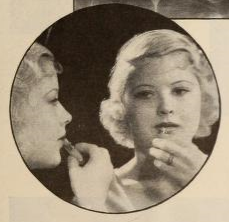
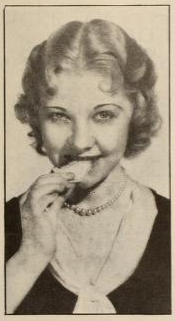
Precode Beauty Tips

Take the advice from Precode’s biggest stars on how to stay screen ready:


Tip 1 - For Luscious Lips:
“For clearly defined, smooth rouged lips, follow Mary Carlisle’s advice: ‘Outline lips horizontally with edge or point of stick, then fill in vertically with flat side.’”
 
 
Tip 2 - To Even Skin Tone:
 “Almond meal mixed to paste with lemon juice makes a good, safe bleach, says Maureen O’Sullivan. Apply to cleansed skin, let dry, remove with cold water. Leaves the skin soft, clear.”


Tip 3 – Food and Skin:
“Una Merkel considers cucumbers a definite skin beautifier, not only in creams and lotions, but in the diet. Una looks as if she enjoyed them, too.”
 
Tip 4 – For Soft, Smooth Hands:
“Mary Carlisle remembers to slip on cotton gloves over her well-oiled hands before retiring, a sure way to flower-like skin. Specially treated sleeping gloves come for those with unusually sensitive skin.”

 
Tip 5 – Something Extra:
The beautiful Jean Harlow used a beauty mark to add to her attractiveness. “Beauty-marks are for the fair-skinned only, where the contrast between black and white is striking and exotic.”
 
For anyone wanted to measure their attractiveness. This is a devise used to measure a person’s beauty by looking at an individual’s symmetry. According to Max Factor and its inventors the nose, the forehead and between base of the nose and tip of chin should be the same length. The distance between the eyes should be the same as the length of the eyes. The actress is Sheila Terry.


Saturday, 15 February 2014

The (Not So) Merry Wives of Reno (1934)

A witty play on words from Shakespeare’s iconic play, Merry Wives of Reno (1934), focuses on the muddled lives of three quintessential Precode couples – perfect newlyweds, a cheating much younger wife and an older couple that never seem to see eye-to-eye. The champions of the film are three second banana staples of the early 1930’s – Glenda Farrell, Guy Kibbee and Hugh Herbert - who cause trouble for the youthful loved up couple, Donald Woods and Margaret Lindsay. Their performances only outdone by the hilarious comic relief from Eloise, a playful, animated and always present sheep.
 
Frank (Woods) and Madge (Lindsay) are a sugary married couple celebrating their first anniversary. As gifts they buy each other expensive overcoats and plan a romantic diner. Their neighbours, however, are the unhappy couple Tom (Kibbee) and Lois (Ruth Donnelly) whose decade’s long marriage has been filled with arguments, plate throwing and husbandly infidelity. Bunny (Farrell), a wealthy wife, with her husband out of town is bored and looking for excitement invites Frank over on the pretence of buying a boat from him. He soon finds out she wants more than just a sea vessel and tries desperately to leave the apartment before the energetic Bunny causes him more trouble. Thankfully it comes in the form of Tom who is also having a casual fling with the bored housewife arrives, drunk, looking for a fun time. Frank exits, negligently, leaving his new overcoat behind. Minutes later in another comedic twist, Bunny’s husband, Colonel Fitch (Herbert), returns from his business trip, glowing and satisfied, bringing along his new prized possession, Eloise the sheep. Flustered and still intoxicated, Tom exits, also unfortunately leaving his overcoat beside Frank’s in Bunny’s hall closet. 
Margaret Lindsay and Ruth Donnelly
When the husbands finally return overcoat-less – and one of them drunk – to their wives dual arguments ensue. Both creating invented stories as to the location their jackets and not succeeding to persuade their spouses that they are innocent. Impulsively, Madge and Lois conclude that the only solution is to divorce their lying, cheating and mistreating husbands and head to Reno. On the train ride the wives, in a serendipitous moment, finally meet, discover their connection and resolve to leave their marriages behind and find laugher and good times in Reno. Hot on their tails is their jilted husbands who have also joined forces desperate to win their wives back and restore their domestic homes. Following behind is Bunny and Colonel Fitch also on the train destined for Reno with a hidden Eloise under the passenger’s seats.

They all stay at a traditional Reno hotel filled with parties, alcohol and newly divorced women. All paying customers can have any need met by the accommodating concierge, Al, played by the hilarious Frank McHugh, who spends most of his time organising parties and acting as a kind of gigolo for lonely women. The couples constantly switch from separation to reconciliation as they navigate through misunderstandings, drunken nights and other women. In the end all it takes is a taste of their own medicine to bring the wives back to the comfort of their husband’s arms and a happy conclusion for this light-hearted Warner Bros. comedy. 

The use of supporting character actors brings a different edge to the picture. Although it is witty and poignant when it comes to marriage fidelity and infidelity, the film lacks slightly with casting. Both Farrell, Gibbee and name are perfect accompanying actors but seem not strong enough to carry a picture with name and name also a little weak. It appears to be a truly ensemble cast that could have benefited from the inclusion of someone like Joan Blondell or Warren William. The film shines with Eloise who is surprisingly vibrant and dramatic for a sheep. Frank McHugh is also brilliantly included as the naughty but helpful concierge. Merry Wives of Reno is not a great Precode drama or commentary on social issues but is a fun, light way to spend an hour in both in the 30’s and now.     


Wednesday, 12 February 2014

Banned: The Screen Life of Scarface (1932)


Finally released in 1932 the original Scarface film has become a legendary example of the 1930s gangster and crime genre and the use of shockingly realistic depictions in Precode Warner Bros. productions. But its journey to pop culture immortality was filled with more road blocks, obstacles and authority inference then the characters of the movie experienced. For its unabashed portrayals of criminals, killings and glorification of gangsters and, in its original version, political hypocrisy and lack of repentance, Scarface is one of only a handful of films significantly censored during the Precode period and even banned in several states and cities.

The movie featured successful gritty actor Paul Muni alongside Osgood Perkins, Ann Dvorak, Karen Morley and iconic horror staple Boris Karloff. The film centres on Muni as an Italian immigrant caught up in the highly territorial gang warfare of 1920’s Chicago. He works under mafia boss Johnny Lovo (Perkins) and, after murdering another head Big Louis Costello, the pair take over his organised crime operation on the south side of the city. This mostly focuses on running speakeasies and manufacturing and distributing prohibited alcohol. But, Tony (Muni) becomes increasingly greedy interfering in the businesses of other gangs, such as, the Irish mafia and develops an obsession for machine guns. His ambitions makes him become increasing erratic and he becomes the key focus of public attention, law enforcement and politicians. The mainstream edition of the film ends with a shootout with Tony eventually surrounded by the police and gunned down after attempting to escape.    

Produced by perfectionists the two Howards – Howard Hawks and Howard Hughes – and directed by both Hawks and Richard Rossen the film, based on a 1929 novel by Armitage Trail, was not destined to sit well with censors. While in the production phrase the movie was beginning to draw interest from the Hay’s department mainly for its apparent similarities with the real-life drama of Al Capone. This included comparisons to many murders and massacres Capone was involved in. In addition, the film’s main writer, Ben Hecht, claims men working for Capone confronted him to ensure there was no blatant connections between the stories and some historians have even asserted the men were working on the film as consultants.

During the three month shoot there was increased pressure from Hays who was worried the film would be too violent and glorify crime. The script had to be changed several times; first to alter the depiction of Tony’s mother to make her less accepting of her son’s lifestyle and gang involvement – calling him ‘bad’ and ‘no-good’ - and a second to remove hints of political hypocrisy. Hughes was reportedly soo frustrated by the interference by censors he told Hawks, "Screw the Hays Office, make it as realistic, and grisly as possible." The original version of the film was completed early September 1931 but had to remain in production to shoot an alternative ending. In an attempt to appease the MPAA, a second version was created showing Tony’s being caught, tried and hanged for his crimes. This is opposed to the original ending which showed Tony killed by police bullets but not held accountable for his sins. Other edits were also made before the official release of the picture; namely, a sub-title ‘Shame of the Nation’ was added, the inclusion of a moral statement in the beginning of the film, removal of blame on law enforcement and removal of incestual undertones between Tony and his sister Francesca (Dvorak).
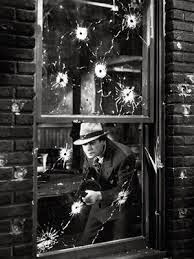
However the exhaustive changes proved not enough to pacify state and city censor boards. The film was ultimately banned in five cities and five states and censored further in others. The main issue was between Hughes and the New York censor board. After the film was banned – the organisation even refusing the sanitized ending - the producer took the board to court for the rights to show his film. After several lawsuits the restrictions were lifted.  In Chicago, the location of the film, the showings were delayed by over a year. Similarly there were issues selling the film overseas with Nazi Germany prohibiting the movie from entering the country. The issues with the overall circulation of the film made it – according to historians – not much of a box office success with Hughes forced to withdraw it from viewings and it wasn’t widely seen until its reissue in 1979.

Although its initial success is questionable, Scarface (1932) is undoubtedly a cult classic today. Its raw and realistic depiction of crime, gang warfare and the 1930’s depression society, is shocking even to contemporary audiences and shows the daring and will of the movies creators. The issues and controversy surrounding its original release – although arguably detrimental firstly – only adds to its notoriety and legend today.