.quickedit{display:none;}

Thursday, 18 July 2013

The Scandal of Mary Pickford’s Curls


Nicknamed, “The Girl with the Curls”, silent actress Mary Pickford had made her living through her spunky, confident persona and iconic matching long, golden curls. By early 1928, Pickford’s life and career was still at its peak. She was married to the equally legendary actor Douglas Fairbanks, just completed what would be her last silent film ‘My Best Girl’ (released October 1927) and had co-founded the Academy of Motion Picture Arts and Sciences – along with the Academy Awards – only a year before. However, a few months later in March 1928, her life would take a dramatic twist with the death of her greatest support and ally, her mother, Charlotte Pickford, from breast cancer. Mrs Pickford had introduced her daughter to acting and had advised her during most of her career.

A few months later and still intensely grieving her mother’s loss, Mary Pickford made what would become a major and controversial decision, to bob her famous curls. They had been her attraction since her early stage years and a symbol of her youthful innocence. But Pickford, now aged 36, wanted desperately to graduate from the child-like roles that had shaped the stardom of her silent years and move on to the more adult and sophisticated parts that were on offer as the talkies arrived. Instead of seclusion, Pickford invited a journalist and had the event filmed and photographed.
 
 
Although, Pickford aimed at receiving some publicity she could not predict what was to follow. On 22 June 1928, it had become front page news. Titles like, “Famous Golden Curls Go” and “Mary Pickford Cuts Her Hair”, were plastered over the front pages of almost every major newspaper in America. It had become a national scandal.

Pickford quickly issued interviews and statements regarding the controversial haircut. “I’ve cut my hair,” she said, printed in the New York Times 23 June 1928. She continued:  

“Oh, I still have them. They’re all wrapped up ready to be pinned on if I ever need them. They were such a nuisance, you know, hanging down below my waist. So many women in New York were wearing long hair, I can’t see why any woman would want it long. It was a shock to Doug, of course; he almost wept when he saw it cut short. I had to have it done because I’m not going to be a little girl any more. No slums or curls in my next picture. I’ve always been a girls’ girl and now I’m going after the boys.”  
 
   
Her comments continued the publicity and interest in her new ‘do’, also being featured on the cover of a 1928 edition of Photoplay magazine.
 

But, the big question was yet to be answered. How would this snip affect the career of an actress who seemed to be created by her iconic curls? The result was initially mixed, her next film and the first with Pickford featured, curl-less, in a more adult and sophisticated role was ‘Coquette’ (1929) where she played a flirtatious society girl. It was well received by audiences and critics and won her an Academy Award for Best Actress. However, after her initial talkie success, Pickford’s career faded as audiences failed to respond to her in similar roles. She appeared in three more films before her retirement from acting in 1933.

Although, Pickford’s career was not reliant on her hair style and retirement could have been due to many other factors, such as, her age, the introduction of sound and altering acting styles and the new female ‘ideal’, it is interesting to note the impact of hair on an actor’s career.  This topic was featured in an article in ‘Troy Sunday Budget’ published a few years before in 1925. (This was taken a post on the wonderful Nitrateville website).
"The vogue of bobbed hair gave the employers of movie stars many worries and in a number of cases caused them heavy financial loss. Too late they discovered how much a few ill-considered snips of the hairdresser's shears could impair the value of an actress. In drawing a contract with a woman star nowadays the length of her hair and the manner of dressing it are carefully considered.”

"Jobyna Ralston is a member of the Hollywood sisterhood of unshorn tresses. Harold Lloyd, whose leading lady she is, thinks Miss Ralston is of much greater worth to him in his pictures as the modest, demure little miss with long curls, than as the bob-haired flapper type. Consequently in a contract recently signed she agrees to shun the barber's shears.

"On the other hand, Betty Bronson had to agree to cut off the beautiful long hair of which she was so proud before she would be given a contract. Only a boyish bob would do for the role of Peter Pan for which she had been selected by Sir James Barrie."

Also, interestingly, according to the Mary Pickford Foundation, Pickford later wrote about her decision to cut her famous tresses, “Were the choice given to me again, I am positive I would not do it.”

Saturday, 29 June 2013

Hollywood Costume exhibition in Melbourne

Its times like these I wish I lived in Melbourne. The arts capital of Australia is playing host to an amazing collection of costumes cataloguing decades of film history. The ‘Hollywood Costume’ Exhibition from the Victoria and Albert Museum (V&A) in London and touring worldwide is on its final stretch closing August 18. It features a massive array of iconic pieces, such as De Givenchy’s famous LBD for Audrey Hepburn in ‘Breakfast at Tiffany’s’ (1961) and Vivian Leigh’s green curtain dress in ‘Gone With the Wind’ (1939).


The exhibition, housed in the ‘Australian Centre for Moving Image’ (ACMI), also includes other components of the costume making process including scripts, sketches and costume fitting photographs as well as film clips, montages and interviews to accompany the pieces. In addition to the exhibition, the ACMI is running a number of events focusing on key figures and designers; such as, Australian-born Orry Kelly programs on his creations in ‘Some Like it Hot’ (1959) for Marilyn Monroe and ‘Gypsy’ (1962), and special showings of ‘The Addams Family’ (1991), ‘The Wizard of Oz’ (1939) and ‘102 Dalmatians’ (2000). Some other costumes featured in the exhibition were featured in: Titanic (1997), Ben-Hur (1959), Casino Royale (2006), ‘Superman’ (1978), ‘The Iron Lady’ (2011) and many more. I encourage any film loving Australian to go see it as I probably won’t be able to make the trek from Brisbane to Melbourne before it moves overseas. 

Below is a few pictures from the exhibition mostly from its original home at the V&A:


The clip below features the exhibitions curator, Academy Award nominated film costume designer and historian, Professor Deborah Nadoolman Landis, discussing the exhibition and its importance in film history.


Thursday, 20 June 2013

Too Hard, Too Fast: The True Legacy of Mayo Methot


Her legacy today – although minimal and only to dedicated film buffs – is as the former “Mrs Bogart”. The one that caused, prolonged and hindered the famous affair between then husband Humphrey Bogart and Lauren Bacall and probably contributed to making it the romantics dream love story that it is today. Mayo Methot was in her own right a talented and powerful stage and screen actress. Although typecast early in her career, she found success and acclaim within the over 30 films she made during her short life. Bacall in her 1978 autobiography ‘By Myself’ described her in no flattering terms as a drunk, erratic, unstable, selfish and “in her paranoia”. However, these were the words of the youthful and besotted other women on her beloved’s wife. Bogart himself defined his former wife in terms both positive and negative, he would at once seem to be both praising and degrading Methot. At one point during their marriage he commented, “I like a jealous wife…I wouldn’t give you two cents for a dame without a temper.” But among these bitter and emotion-filled words was others from the community that supported her through the highs and lows of her career. She was noted as being vulnerable, passionate, full of talent and bouncing with energy for life and the future. Perhaps, like most people in the film community, Methot was a mixed and complicated bag of traits and temperaments – a naïve, innocent child who opened the Pandora’s Box of alcoholism, jealously, exhaustion and rage. Not just the former Mrs Bogart of the Bogie and Bacall love story.        

Methot was born on March 3rd 1904 in Portland, Oregon to a comfortable, middle class existence. Her parents a sea captain and a journalist instilled in their daughter a sense of independence and determination from a young age. Her mother, Beryl, intent on having her daughter succeed at something more than just housekeeping and motherhood was the first person to introduce the young Mayo to acting. She guided her daughter into beginning her early career in small productions around the Portland area. As Methot’s profile grew appearing in more substantial roles as the lead in “The Littlest Rebel” – later captured on screen by Shirley Temple – and even gender-bending, playing a boy in a production dedicated to the Greek poet, Sappho. By eight-years old the pint-sized actress now dubbed by the media “The Portland Rosebud”, was given one of her first big breaks. She was cast as the official mascot for the city of Portland and was given the tremendous honour of presenting roses to President Woodrow Wilson and other government officials at the White House. In an interview young Methot commented, “The president is awfully nice… He has a lovely room with pictures on the walls of other presidents.” She continued quite patriotic towards her birth city that she, “lik[ed] it better than any city or town or state I have seen yet.”
Mayo Methot 1913
 

It would be ten years later that Methot would leave her cherished city with hopes of stardom bound for New York. Although she had a brief job as an extra in Lionel Barrymore silent vehicle, ‘Unseeing Eyes’ (1923), she returned almost instantaneously to her favourite medium, the stage. In the same year as her film debut, the struggling yet experienced and established actor, Methot, was spotted by popular Broadway impresario, George M. Cohan. Struck by her energy, beauty and spirit, he cast her in his play, ‘The Song and Dance Man,’ which Cohan both directed, produced and starred in. The production was a hit with audiences but fell flat with critics who, although found the story overused and tired, reported that Methot was “fresh and effective”. The combination of Cohen and Methot provided even more effective than her first performance, with the duo pairing up in around 10 more productions during the late 1920’s. Methot, never truly considered a traditional beauty by film studios and movie-goers, was labelled a “little blond beauty” with a “sweet voice” and “naïve…dramatic skill” during her blossoming stage career.  Many critics judged her to be not only beautiful but intelligent and an accomplished and emotive actress.    


It was in 1930 that she was brought to Hollywood and taught the delicate art of film acting as well as personal promotion and the mores of gods of the film industry, namely, studio bosses. She signed a contract with Warner Brothers who began their naïve “Portland Rosebud” in ‘Taxi Talks’ (1930) a 14 minute Vitaphone short featuring, alongside Methot, also on his debut, a young Spencer Tracy. He entre into Hollywood also brought another change to Methot’s life. After her short marriage to cameraman Jack La Mond dissolved in 1927, she began a relationship – and later, in 1930, married – co-owner of the legendary Hollywood restaurant Cock n’ Bull and wealthy businessman, Percy Morgan Jr. In this pairing, Methot, became a version of what she had always dreamed, a housewife. But to blacken the romance was the stresses of Methot’s blossoming film career and her burgeoning reliance on alcohol spurred by constantly spending time at her husband’s popular meeting place.     


Her first feature film came a year later in gangster film ‘Corsair’ (1931) taken from a novel by Walton Green starring Chester Morris and Thelma Todd. Directed by Roland West, critics gave its average reviews mostly centring on Morris’s performance in his first starring role and Todd’s outstanding blond beauty. In her next film, Methot was cast in a role attributed to beginning Methot’s “typecasting” which would plague her for the rest of her career. In, ‘Night Club Lady’ (1932) alongside film sophisticate Adolphe Menjou she plays a hardened night club singer whose love of men, liquor and the fast-paced party life, entangle her in the underside of organised crime. Similar to most of her subsequent roles, Methot, is both a reprobate figure and a vulnerable one when she is murdered and Menjou is enlisted to solve the mystery of her death.
 
Methot and Menjou in 'Night Club Lady' (1932)
 
Methot appeared in over ten comparable supporting roles until the dawn of mid 1934 brought strict censorship and controls over language, occupations, subjects and behaviour caused a blow to Methot’s career as well as many others of that period, such as, Mae West and Dorothy Mackaill. Her onscreen sin – drinking, partying and dubious professions – had to be curtailed.


By the mid 1930’s she was not a bone fide star but had appeared together with a number of screen legends, for example, Carole Lombard, the Barrymore brothers, James Cagney and Mary Astor. She appeared in four more “post-code” productions, including the popular ‘Mr Deeds Goes to Town’ (1936), when she was cast in the fateful film, ‘The Marked Women’ (1937). It was to be the first film to feature Methot and Bogart together and was probably the catalyst for their relationship and marriage. Also starring a feisty and dominating Bette Davis, the film revolves around a bar or “clip joint” which is the location for many shady dealings including illegal gambling, blackmail and murder. When Bogart’s character is sent to investigate the death of a young man, he finds the hostesses coerced into covering up a series of crimes perpetrated by their boss, a notorious gangster.

Methot and Bette Davis in 'The Marked Women' (1937) 

It was a year after the release of the film that Methot and Bogart were married. Although it was a surprise, both had similar up-bringings and appeared to want similar futures. They both had a passion for acting, the sea, drinking and desired a stable lifestyle. They settled down to a fairly steady home-life with Methot the “retired housewife” looking after their dogs and Bogart’s boat – a tribute to his wife, named, “Sluggy”. The marriage even proved beneficial to Bogart’s career, with actress Louise Brooks commenting, “except for Leslie Howard, no one contributed so much to Humphrey's success as his third wife, Mayo Methot." She continued, "those passions--envy, hatred, and violence, which were essential to the Bogey character, which had been simmering beneath his failure for so many years--she brought to a boil, blowing the lid off all his inhibitions for ever." Although positive in his professional life these qualities slowly withered away the affection and foundation that began the relationship. Their public image as the “Battling Bogart’s” made the problems between the couple even worse as they were broadcasted and known to everyone in Hollywood. The arguments, the drinking, the constant suspicion and jealously and even the concealed incident when Methot apparently stabbed Bogart in the shoulder plagued the fragile marriage.    


Methot and Bogart - the happier times
As Methot’s career faltered, Bogart’s prospered being cast in leading roles in more and more prestigious properties. It was more than her personal life that made acting roles untenable, Methot’s appearance - although never classically beautiful she was considered pretty and attractive in her younger days – had begun to become ruddy, sunken and aging as she crept towards 30. Some directors even considered her un-photographable at the end of her career. Rock bottom in the marriage occurred during the mid-war years when Bogart and Methot, visiting long-time friend director John Huston in Italy, began another night of conversation and heavy drinking. Methot, nostalgic of her earlier glory days on the stage, performed a song for the pair. Drunk, bitter and depressed the performance was incoherent, unbearable and to her husband utterly embarrassing. Another example of the public nature of the relationship, the incident was reportedly used as inspiration for a scene – featuring actress Claire Trevor in place of Methot – in Huston and Bogart’s film, ‘Key Largo’ (1948).          

By 1945, although neither Bogart nor Methot would have predicted it at the night of her painful private performance, their marriage would be over. Bogart would move on to the beautiful and intelligent Bacall - their legendary Hollywood love story - and Methot would return to her alcohol, solitude and bitter reminiscences. She made only seven films after her marriage to Bogart, mostly small B-class movies in even smaller, unrated roles. On June 9th 1951, alone in a motel in Multnomah, Oregon, Methot died aged only 47 from complications from cancer. She laid undiscovered for several days. On hearing the news Bogart reportedly said, "Too bad. Such a waste. She had real talent, she had just thrown her life away." There was also reports that roses were sent to her grave in Portland every week until the death of Bogart six years later. Methot was neither an entirely a tragic figure nor a Hollywood success story. She lived a fast-paced life, full of success and failure, full of ups and downs and paid for it in the end.   

Saturday, 25 May 2013

Chatterton, Precode and Forgotten Actresses: Interview with Scott O’Brien


Like many film fans writer and biographer, Scott O’Brien’s, love of classic movies and television began from an early age by watching re-runs of the legends, such as, Myrna Loy and William Powell on television. Years later his passion for the forgotten legacy of Kay Francis, prompted him to research and write a biography on the great screen personality. This stimulated his interest in the other forgotten actresses of classic Hollywood, going on to publish two more in-depth biographies on Ann Harding and Virginia Bruce. His new book, “Ruth Chatterton: Actress, Aviator, Author” released this month discusses another remarkable, modern lady from the Precode era. Her personal legacy reached a multitude of arenas – the stage, film industry, aviation, publishing and politics – with her qualities of extraordinary determination, independence and intellect that shaped her successes both public and personal. Graciously, Scott O’Brien agreed to answer a few questions, detailed below, on his new book, Ruth Chatterton and the women of early 1930’s Hollywood.


Emma Alsop: What made you interested in classic films in general and the actresses of the 1930’s in particular?

Scott O’Brien: In my teens (1960’s) I enjoyed coming home from school and watching classic movies on TV.  Screwball comedies of Myrna Loy and William Powell were particular favorites.  The dialogue was filled with sharp wit, and Loy’s low-key style was still fresh.  I got to meet her in San Francisco while she was on tour in Barefoot in the Park (1965) and she showed genuine interest in me as a person.  She was a mentor, of sorts.  Her work in civil rights, fair housing, and the United Nations (UNESCO) influenced my own world view. 

My interest in Precode Hollywood blossomed in the 80’s with the advent of AMC and TNT.  The gritty/risqué/honest edge of these films really surprised me.  While I enjoyed the more emotional actresses like Norma Shearer and Bette Davis, I was also drawn to the understated style of Kay Francis, Ann Harding and Virginia Bruce.  


Emma: When did you first come across Ruth Chatterton and what is your favourite film of hers?
Scott: A private collector in the Bay Area had a screening of Once A Lady (1931) while I was attending San Francisco State in 1968.  It’s a dreadful film, but Chatterton had a compelling way of making an impossible, fantastic character come to life.  A few years later I saw Dodsworth (1936) and I was hooked.  Her role as Fran Dodsworth—a vain, foolish woman who is desperate to stay young is amazing to watch.  Chatterton makes Fran familiar and understandable.  Anybody’s Woman (1931) is another standout despite a hokey ending.  Chatterton plays a burlesque queen who tries to turn her life around.  She completely disappears into her character with stunning results.  Dorothy Arzner directed this little gem.   


Emma: How did you approach the biography considering Miss Chatterton was not only an accomplished film actress, but stage actress, aviator and author?

Scott: I decided that if I wanted to know what made Chatterton tick, I had to look at what she wrote about.  I cover her career as a best-selling author in Chapter One.  She began writing in the late 40’s—her first book released in 1950.  Once I establish how she looked at life, I take the reader on a journey back in time to discover how she acquired her world view.  At 16, Ruth took to the stage.  She had a mother to support after her parents separated.  Her father was a rather useless man who made a career of declaring bankruptcies and living off his in-laws.  Chatterton’s acting career was her anchor.  Her interest in aviation began in the late 1920’s, capping with her air derbies in 1935-36.     
I was fortunate to have the help of Ruth’s favourite cousin’s daughter, Brenda Holman.  Brenda sent me a package that contained the only memorabilia that Ruth saved from her career: photographs, telegrams, letters, and the first chapter from her last novel (unpublished).  This material was truly a godsend.  I also learned that a woman named Ruth Moesel had written a biography on Chatterton in the 1960’s.  It was never published, but the manuscript is held at the New York Public Library.  I was lucky to find someone who looked over the manuscript and collection of letters that Moesel had accumulated during her research.  While the manuscript offered nothing new, the letters from Ruth’s friends and co-workers were very useful.
 

Emma: She was in her mid-30’s by the time she entered films. Why do you think she made this leap as she was in the midst of a very successful and stable stage career? Was she an instant hit with the studios and studio heads?   

Scott: Actually, Chatterton’s stage career had come to a standstill by 1927.  Her husband Ralph Forbes was an upcoming star at MGM (Beau Geste) and Ruth was in limbo.  She even took time out to cover a murder trial for the Los Angeles press (the notorious Hickman Trial).  She did a couple of screen tests that bombed.  She never let Josef von Sternberg forget that he rejected her for a role in The Docks of New York (1928).  Emil Jannings came to her rescue offering her a lead in Sins of the Fathers (1928—considered a lost film).  Paramount signed her to a contract and within months she became one of their top stars.  Myron Selznick was Ruth’s agent and when he finagled a more lucrative contract for her with Warner Bros. in 1931, she was pleased.  Paramount wasn’t happy.  They put her in a few clunkers before she made her exit.  Ruth’s stay at Warner Bros. wasn’t fulfilling.  Frisco Jenny (1933) was her only big box-office hit for the studio.  She decided to freelance and pursue her interest in aviation. 


Emma: How did Ruth begin writing novels and were her books popular?
Scott: Ruth’s first novel, Homeward Borne, stayed on The New York Times best-seller list for 23 weeks.  Her interest in the assimilation of Jewish refugee orphans into American life was an uncomfortable, unusual topic, but Chatterton had a way of pulling readers into the narrative and absorb her message.  She considered herself a crusader for social injustices.  Her second book, The Betrayers, targeted Senator Joe McCarthy and the House of Un-American Activities investigations.  The more progressive critics and readers loved her books.    


Emma: Why do you think Ruth Chatterton is largely forgotten as a film actress today, unlike others of her era, Jean Harlow, Mae West and Loretta Young?
Scott: Harlow’s tragic death kept her name and legacy alive (deservedly).  Mae West and Loretta Young (Bette Davis, Joan Crawford, Katharine Hepburn) remained active on stage, screen, and TV for decades to assure their status as cinema legends.  Chatterton’s last film was in 1938.  She assumed the public was, in her words, “richly tired” of her.  While she continued on stage and did some TV appearances, she was focused on being a writer.  She was a success at redefining herself and being, as you say, “largely forgotten”.


Emma: Your biographies include not only Miss Chatterton but Kay Francis, Ann Harding and Virginia Bruce, all women who were at their peak in the Precode era. What drew you to the lives and careers of these women? Did you find similarities with them other than the time of their successes?
Scott: I appreciate the understated style of Francis, Harding and Virginia Bruce.  They did not overplay.  Their approach to acting was natural and unaffected.  I always wanted to know more about them and got tired of waiting for someone else to tell their story.  I’ve been fortunate to make contact with family, friends, and co-workers of these talented women.  On a personal level, each actress was focused on entirely different things.  Francis focused on being financially independent and enjoying a rather prolific love-life.  Harding’s background in repertory theatre and ensemble playing didn’t exactly jive with Hollywood stardom.  She could be headstrong.  She had strained relationships with her family and daughter.  Virginia Bruce was a real romantic.  Sadly, her devotion to her last husband brought her much heartache and financial difficulty.  Ruth’s extravagance and generosity left her practically penniless.


Emma: It is difficult for movie-goers to distinguish the stars from their onscreen personalities. I always imagined Ruth to be strong, independent and modern, similar to her characterizations in ‘Female’ and ‘The Crash’. What picture did you paint about Ruth from your research?
Scott: You are spot-on about Ruth.  She was ambitious, independent and had ideas of her own.  She was what they call “ahead of her time.”  She didn’t give a fig what people thought.  She would tell them what to think.  She and I are pretty much on the same page in terms of how we see the world.  However, Ruth saw herself as a crusader.  One thing I like about her novels is that they have no heroes.  She was adept about giving the back story for all the characters involved in her novels.  You may not like them, but you understand them. 


Emma I also hear you are planning a book on one of Miss Chatterton’s husband’s, George Brent. Is this true?
Scott: While researching Chatterton, I was contacted by Irish filmmaker Brian Reddin.  Reddin is working on a documentary on George Brent (born George Nolan in Ballinasloe, Ireland).  As Brent was Chatterton second husband, Reddin was interested in my research.  Together, we were able to zero in on Brent’s participation in the Irish Revolution in 1921.  I got hooked.  While Brent wasn’t as charismatic as Gable or Cagney, he was a steady, reliable talent who was willing to allow his leading ladies to steal the limelight.  He’s especially good as Tom Ransome in my all-time personal favourite film The Rains Came (1939)


To find more information on author Scott O’Brien and his works - ‘Ruth Chatterton: Actress, Aviator, Author’, ‘Kay Francis - I Can't Wait to be Forgotten’, ‘Virginia Bruce - Under My Skin’ and ‘Ann Harding - Cinema's Gallant Lady’ – can be found on his website, linked here


Tuesday, 7 May 2013

A Bit of Aussie Appreciation: George Wallace


George Wallace is the forgotten comedian of Australian film. He portrayed working class, jovial and laconic characters ready to ‘take the mickey’ out of anyone who let them. As a star of film, stage, radio and vaudeville, for over 40 years he is one of Australia’s biggest stars and greatest legends – not to mention extremely funny!
 
 
He was born George Stevenson Wallace in Aberdeen, New South Wales on the 4th of June 1895. As the legend goes, George was said to have been born in a tent in the middle of winter and only survived freezing to death by the midwife feeding him hot porridge to keep him warm. His ancestry and nature made him born for the entertainment industry, with his father and grand-father both regulars in the local vaudeville scene. As soon as he was able to walk George was performing, he began – aged 3 – on stage with his family act and a year later dancing and singing for sailors docked in Sydney. For the next few years stage roles became scarce and he began working in a number of trades, such as, dairy farming, cane-cutting, horsemanship, blacksmith and even as a boxer. By aged 16, George – bored, employed at a sugar mill in North Queensland – was given his big break as a comic in a traveling show under comedian Harry Salmon.    

From there George worked his way in performing solo and in acts, several as the top billed performer, in dozens of halls and theatres around the country. He was an ingenious slapstick artist portraying a ‘blue collar everyman’ to the delight of working class Australian audiences. His talents didn’t end at comedy he was also an exceptional dancer (as scene in the clip below), singer, musician and painter. In the 1920’s he had become famous and renowned among audiences and other performers being named one of the “Big Three” most popular entertainers – the other two being Jim Gerard and Roy Rene.   
George Wallace showcasing his tap-dancing abilities in "The Dance of the Startled Fowl"


In the early 1930’s (The Australian version of the Precode era), George, encouraged by the new sound technology and the waning popularity of vaudeville theatres, took a leap and entered Australia’s film industry. The once booming sector, which created around 150 films during the early 1900’s to 1928, was in a sharp decline when George made his first full length movie, ‘His Royal Highness’, in 1932. It proved to be a success and his style of comedy attractive to a society still recovering from the loss of World War 1 and fearing the future of a depression-era Australia. He starred in 4 more films: ‘Harmony Row’ (1933), ‘A Ticket in Tatts’ (1934), ‘Let George Do It’ (1938) and ‘Gone to the Dogs’ (1939) and was a supporting role in two others. Although uneducated, George was instrumental in the creation of the plot and story ideas for many of his films and was credited as a writer in four of them.
 
 
On the eve of World War II in 1940, George’s career faltered with all movie productions called to a halt by the presiding government. He continued on with more work on stage and radio even penning the popular nation boasting anthem ‘A Brown Slouch Hat’. After the war he appeared in two more films one in 1944 and 1951 before heading for England for an unsuccessful comedy tour. It seemed Australia’s older brother didn’t understand or appreciate Wallace’s humour, performance style or heavy accent. He continued quite successfully on radio until his death in 1960 from emphysema and bronchitis.

The Many Faces of George Wallace:


Saturday, 4 May 2013

Such Things Happen in ‘Love is a Racket’ (1932)


Director William Wellman constructs a face-paced, entertaining and witty charade about love, journalism, crime and Broadway in ‘Love is a Racket’ (1932). It stars the often overlooked, Douglas Fairbanks Jr. with the always underappreciated cast of the ‘almost legends’ Ann Dvorak, Lee Tracy, Frances Dee and Lyle Talbot.  

 
In the early Warner Bros screwball comedy, Doug plays Jimmy Russell newspaper reporter and author of the column, ‘Up and Down Broadway’. With his boyish energy and cheeky nonchalant attitude to his work he coordinates the journalism game covering entertainment and soft news and attempting to keep his life simple.

He is guided by his friends, the jovial and loyal Stanley (Lee Tracy) and the quick-witted, stable and cynical, Sally (Ann Dvorak). His downfall – like most Precode men – is a woman, the beautiful and engrossing Broadway star wannabe, Mary Wodehouse (Frances Dee). Jimmy chases her under the watchful eyes of “dragon-lady”, “old-terror”, Aunt Hattie (Cecil Cunningham).
 
 
He knows she’s a liar and uncontrollable but he falls in love with her anyway. But like any good Precode farce nothing is easy, this love match is four-cornered with Sally secretly in love with Jimmy and his pal Stanley in love with Sally.
 

Mary isn’t only ambitious, self-centred, manipulative and stunningly beautiful she’s in debt. Her love of clothes, makeup and vanity has left her owing $3,000 to the dangerous, gentlemanly side of organised crime, Eddie Shaw. Enlisted to help her out of her jam, is blinded Jimmy who’s willing to do anything to help his “weakness”. He attempts to talk Shaw out of debt nonetheless he finds there is more than money between his love and the gangster, Shaw wants Mary to himself and pursues her at all cost.

But, the plot spirals when Jimmy finds Eddie murdered. Methodically and calmly he covers up the murder as a suicide, removing all traces of Mary from Eddie’s house and removing suspicion away from the killer, Aunt Hattie. Battered and soaking wet, Jimmy’s actions and conscious is plaguing him as he decides what he wants the thrilling, consuming gaze of Mary or the warm embrace of Sally. Or perhaps he’ll find that, “love is just a mental disorder,” and it’s best not to get infected.

With the brilliant use of sharp and snappy dialogue and fast plot turns and twists, Wellman conveys truths behind love, relationships and its counterpoints ambition and money.    

Doug’s way with dialogue and movement is charming and instantly likable, proving he is more than the son of his famous parents. The other leads – Ann, Lee, Frances and Lyle – also prove you don’t have to be melodramatic to be memorable, each stealing scenes with their mystery, charm, wit and execution.  ‘Love is a Racket’ overcomes the issues that some early sound films have and is not overplayed or showy.


And above all the wonderful dialogue, excitement and action is the great appreciation for the talent that is Douglas Fairbanks Jr. Not a Precode class, but almost.

Saturday, 2 March 2013

Who’s Misbehaving? – The Top 10 Surviving Precode Stars

There’s not many and they mostly consist of child stars, but below is a list of the top ten still living Precode actors and actresses:


1)     Mary Carlisle

Born: February 3, 1902 (aged 102)
Best known for: WAMPAS Baby Star of 1932, managed an Elizabeth Arden Salon in Beverly Hills

Films: ‘Girl o’ My Dreams’ (1934), ‘Palooka’ (1934) and ‘Saturday Millions’ (1933)


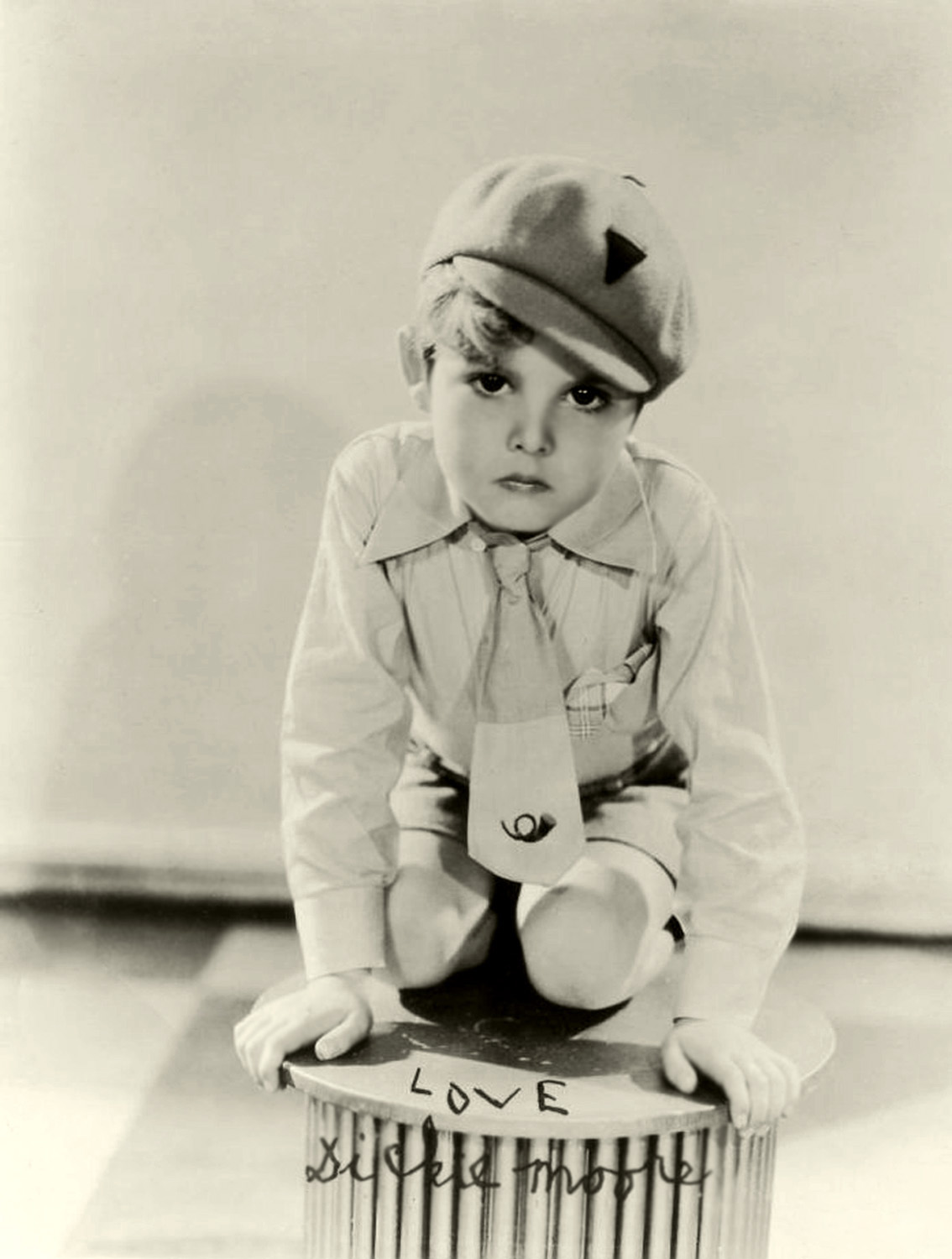
2) Dickie Moore

Born: September 12, 1925 (aged 87)
Best known for: child star, featured in ‘The Gang’ series, gave Shirley Temple her second onscreen kiss

Films: ‘Blonde Venus’ (1932), ‘So Big!’ (1932) and ‘Oliver Twist’ (1933)


3) Diana Serra Cary (Baby Peggy)
 
Born: October 26, 1918 (aged 94)
Best known for: popular child star, author and film historian, current campaign to award her a star on the Hollywood Walk of Fame, fought for better rights for child stars

Films: ‘Off His Base’ (1932), ‘Eight Girls in a Boat’ (1934) and ‘The Return of Chandu’ (1934)


4) Mickey Rooney

Born: September 23, 1920 (aged 93)
Best known for: ‘Mickey’s” shorts made in 1927-9, his acting and musical pairing with Judy Garland, playing the character of ‘Andy Hardy’ in several films

Films: ‘Manhattan Melodrama’ (1934), ‘The Beast of the City’ (1932) and ‘Chained’ (1934)


5) Shirley Temple

Born: April 23, 1928 (aged 84)
Best known for: popular child star, dimples and golden curls, musical performances

Films: ‘Baby Take a Bow’ (1934), ‘Stand Up and Cheer!’ (1934) and ‘Bright Eyes’ (1934)


6) Carla Laemmle

Born: October 20, 1909 (aged 104)
Best known for: niece of Universal Pictures founder Carl Laemmle

Films: ‘Dracula’ (1931), ‘The Broadway Melody’ (1929) and ‘The Hollywood Revue of 1929’ (1929)


7) Cora Sue Collins

Born: April 19, 1927 (aged 86)
Best known for: popular Precode silent star, played Tania (Anna’s first child) in ‘Anna Karenina’ (1935)

Films: ‘The Scarlett Letter’ (1934), ‘Torch Singer’ (1933) and ‘Smilin’ Through’ (1932)


8) Marilyn Knowlden

Born: May 12, 1926 (aged 87)
Best known for: popular child star, appeared with such legends as Norma Shearer, Claudette Colbert and Katharine Hepburn

Films: ‘Call Her Savage’ (1932), ‘Imitation of Life’ (1934) and ‘The Cisco Kid’ (1931)


9) Jane Withers

Born: April 12, 1926 (aged 86)
Best known for: child star, was the heroine in two novels published in the 1940’s and special friend of James Dean

Films: ‘Zoo in Budapest’ (1933), ‘Imitation of Life’ (1934) and ‘Bright Eyes’ (1934)


10) Mary Wallace

Born: September 10, 1914 (99)
Best known for: Precode child star

Films: ‘Kiss and Makeup’ (1934), ‘Little Women’ (1934) and ‘Young and Beautiful’ (1934)